

Speed to lead is the time between a person showing interest in your business and the first real response from you. The shorter that gap, the better your chance of still being the one the customer is talking to, because a lead who enquires is often asking more than one company at once.
This is not a magic number or a secret trick. It is common sense that most teams fail to apply, mainly because nobody is free at the exact moment the form is submitted or the missed call comes in.
Why lead response time matters
A new lead is at peak interest right after they reach out. They have the problem in mind, the phone in hand and a few tabs open. An hour later they are in a meeting, and by tomorrow they may have spoken to someone else.
- Interest fades: the urgency that made them fill in the form does not last.
- Competitors answer: a fast reply often decides who gets the conversation.
- First impressions form early: a quick, helpful reply tells the customer you are organized.
- Context is fresh: the lead still remembers what they asked, so the call is easier.
In the Egypt and Gulf markets there is one more factor: people expect a quick reply, often on WhatsApp or by phone, and they will message the next business on the list if nobody answers.
A worked example with simple numbers
Here is a hypothetical example, not a statistic. Say a business receives 1,200 enquiries a month from calls, forms and messages. Say the team manages to respond quickly to 600 of them, and the rest wait hours or never get a call back.
Now suppose that, of the leads who get a quick response, 1 in 5 turns into a booked meeting, and of the late ones only 1 in 10 does. Those rates are made up to show the arithmetic. With them, the quick group gives 120 meetings and the slow group gives 60.
If you could bring the slow 600 up to the same quick standard, you would gain 60 more meetings a month with the same marketing spend. Plug your own numbers into this method, using the conversion you see today, and you get a realistic picture of what late follow-up costs you.
Where leads slip through
- After hours: enquiries at night, on Fridays and during Ramadan evenings wait until the next working day.
- Busy peaks: all lines are taken, so new callers hang up.
- Hand-off gaps: the lead sits in a form inbox that nobody owns.
- No retries: one call attempt, no answer, and the lead is forgotten.
- Wrong language: a caller who speaks Egyptian or Gulf Arabic or English reaches someone who does not.
How to follow up fast, step by step
- Decide your target. For example, every new lead gets a first contact within five minutes, any hour of the day.
- Route every source into one place: calls, web forms, ads and WhatsApp messages.
- Use a first contact that fits the lead: a phone call for high-intent leads, a WhatsApp message for those who prefer to chat.
- Ask the few questions that qualify the lead: what they need, budget range, timing and preferred contact channel.
- Book the next step right away, such as a viewing, a visit or a call with the right person.
- Retry on a schedule if there is no answer, at different times of day.
- Pass the lead to a human with a summary when they are ready to talk details.
People can do all of this, but only while they are at their desks. The challenge is coverage: nights, weekends and busy moments.
Where an AI calling agent fits
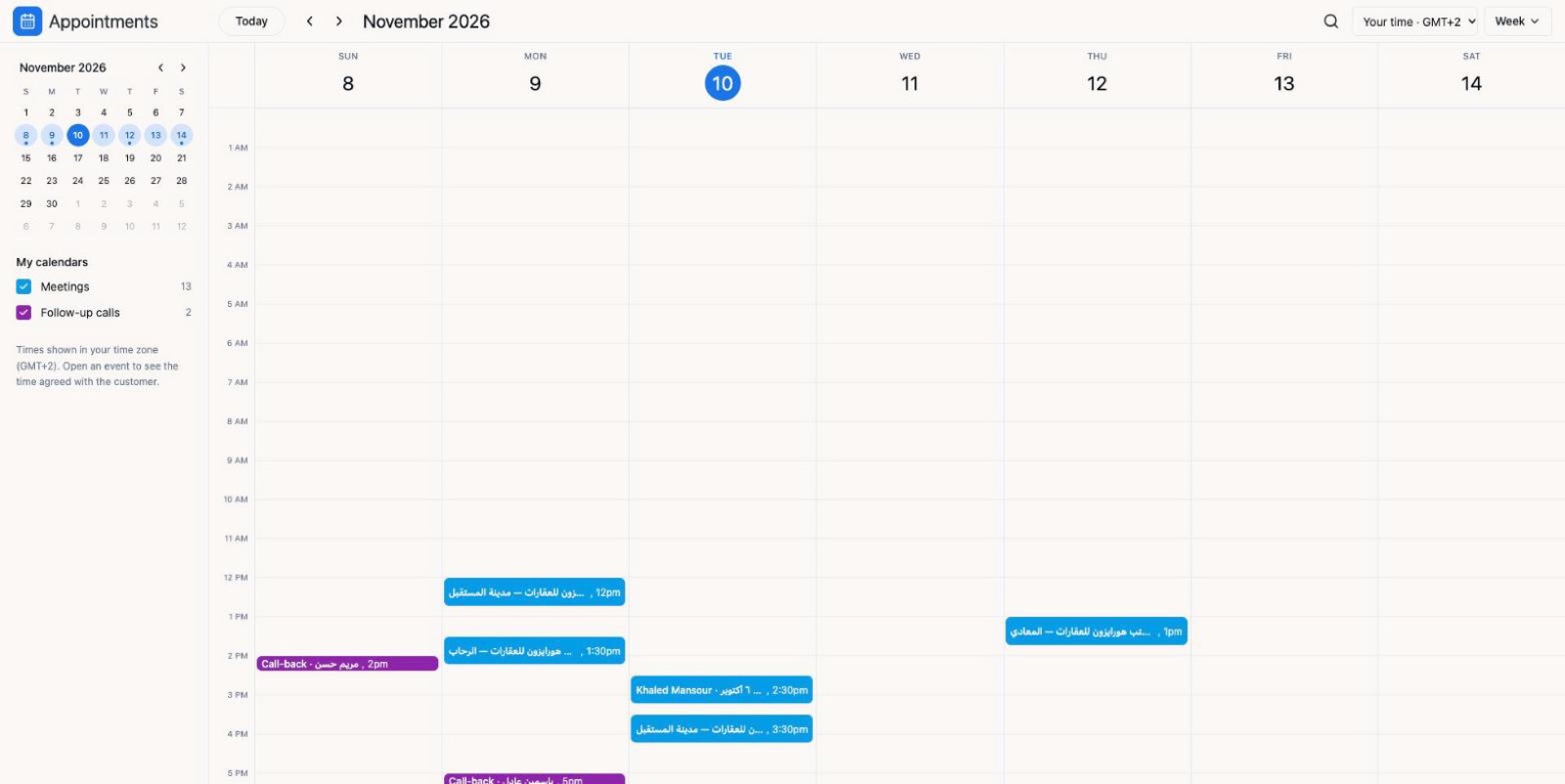
An AI calling agent can reach out the moment a lead arrives, in the lead's own language, whatever the hour. At Kalemna, our agents can call new leads back, ask the qualifying questions, book appointments, send a WhatsApp confirmation and log the outcome so your team sees it in the dashboard with the recording and transcript.
Keep humans for what they do best: negotiation, complex cases and relationship building. The agent handles the speed and the repetition, and hands over with context when a person should step in.
Mistakes to avoid
- Measuring only speed. A fast but unhelpful call is not a win, so also track how many leads reach a booked next step.
- Calling at odd hours without checking preferences. Respect the times your customers consider reasonable.
- Ignoring the lead's channel. If someone wrote on WhatsApp, answer there first or ask permission to call.
- Skipping the review. Listen to a sample of calls every week and refine the script.
Frequently asked questions
What is a good lead response time?
There is no single right number, since it depends on your industry and lead type. A practical goal is to respond within minutes during opening hours and to have an automatic first contact outside them.
Should I call or message a new lead first?
It depends on how the lead reached you. Calls suit urgent, high-intent enquiries, while WhatsApp suits people who messaged first or prefer text. A good setup can do both.
Can an AI calling agent replace my sales team?
No, and it should not try to. It handles instant response, qualification and booking, then hands warm leads to your team with the details.
How do I measure speed to lead?
Record the time of each enquiry and the time of the first real response, then look at the average and the slowest cases. Compare that with how many leads reached a booked next step.