

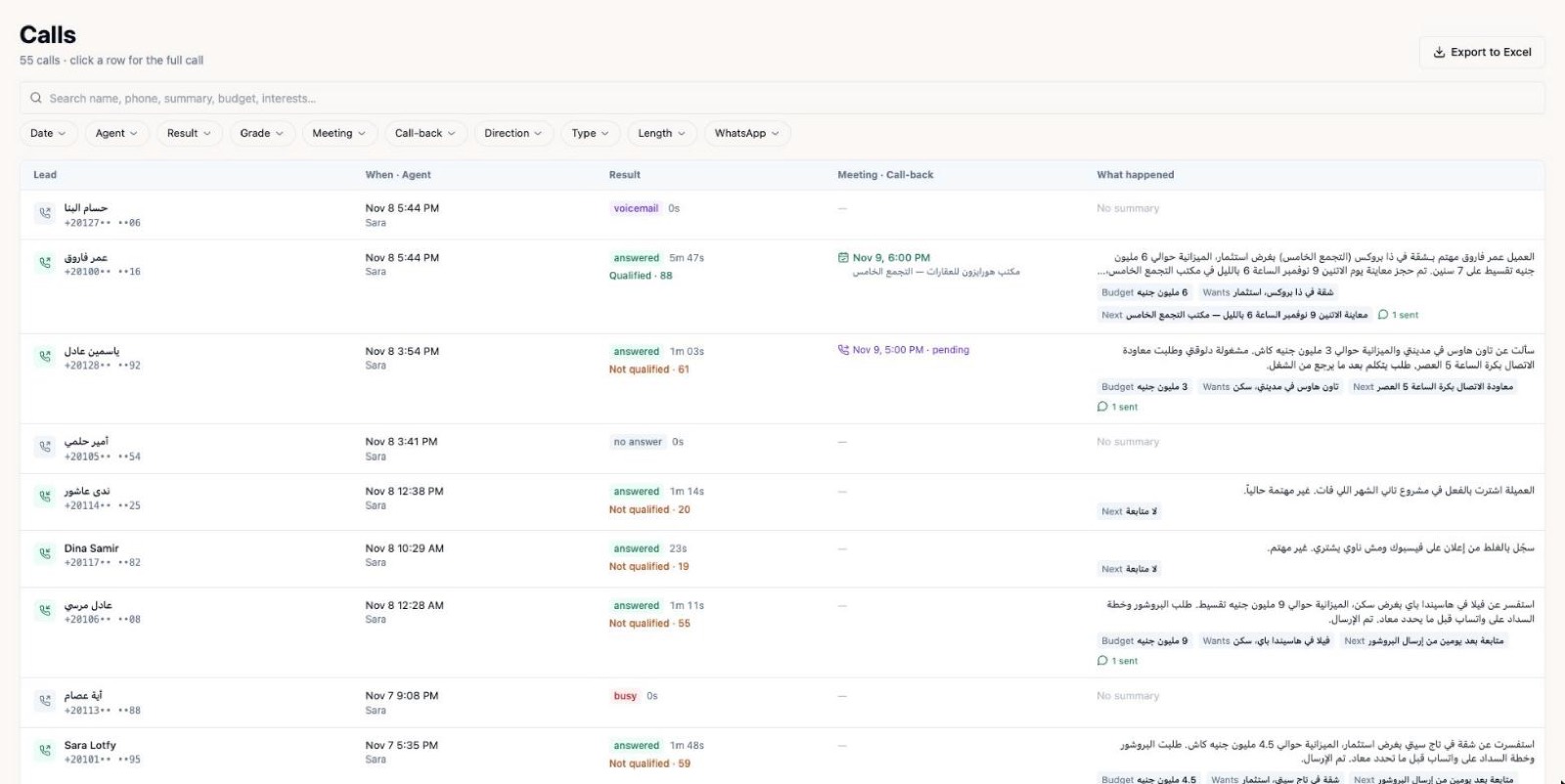
Call center abbreviations look like alphabet soup until someone explains them once, clearly. This glossary does that: the key terms, grouped by what they help you do, with a plain sentence on why each matters when you automate customer calls.
You do not need to memorize them. Keep this page open the next time a vendor, a consultant or a report throws three acronyms at you in one sentence.
The basics: AI, IVR, CRM and CX
- AI (Artificial Intelligence): software that can understand language and decide what to do next. In a call center it means an agent that can hold a real conversation instead of playing a recording.
- IVR (Interactive Voice Response): the classic phone menu, "press 1 for sales, press 2 for support". If you are wondering what IVR stands for, that is it. It routes callers but cannot understand a free-form request.
- CRM (Customer Relationship Management): the system where you keep customers, leads and their history. A good call setup writes call outcomes back into it.
- CX (Customer Experience): how a customer feels about dealing with you across every touchpoint, from the first ring to the follow-up message.
The practical difference between IVR and AI is simple. An IVR makes the caller adapt to your menu. An AI voice agent adapts to the caller, who just says what they need.
Measuring service: CSAT, NPS, FCR, AHT, SLA and KPI
These are the numbers a team lead reviews every week. We do not quote benchmarks here, because a good figure depends on your industry, your callers and your own targets. Set your own baseline first, then improve against it.
- CSAT (Customer Satisfaction Score): a short rating, often after a call or chat, asking how satisfied the customer was.
- NPS (Net Promoter Score): a single question about how likely the customer is to recommend you. It measures loyalty over time, not one interaction.
- FCR (First Contact Resolution): whether the issue was solved on the first contact, with no second call needed.
- AHT (Average Handle Time): the average time spent on one interaction, including talk time and any wrap-up work. Lower is not always better if customers leave unsolved.
- SLA (Service Level Agreement): a promise about service, such as how fast you answer or respond. It can be internal or written into a contract.
- KPI (Key Performance Indicator): any metric you have chosen to track against a goal. CSAT, FCR and AHT are all KPIs.
A common mistake is chasing AHT alone. Shorter calls look efficient, yet if FCR drops, customers call back and your total workload grows. Read these metrics as a set, not one by one.
The technology: STT, TTS, LLM and VoIP
Behind a modern AI voice agent sit a few building blocks. Knowing them helps you ask better questions when you compare solutions.
- STT / ASR (Speech-to-Text, also called Automatic Speech Recognition): turns the caller's voice into text the system can read. Accuracy on accents and dialects matters a lot here, especially for Egyptian and Gulf Arabic.
- LLM (Large Language Model): the language model that understands the text and decides what to say next.
- TTS (Text-to-Speech): turns the reply back into a natural-sounding voice.
- VoIP (Voice over IP): phone calls carried over the internet instead of traditional phone lines.
- SIP (Session Initiation Protocol): the standard that sets up and ends VoIP calls. When someone says "SIP trunk", they mean the internet-based line that connects your business number to your phone system.
In a live call these pieces work in a loop: STT hears, the LLM thinks, TTS speaks. The faster and cleaner that loop, the more natural the conversation feels.
How call centers are set up: PBX, CCaaS, BPO and QA
- PBX (Private Branch Exchange): the phone system inside a business that manages extensions and routes calls. It can be hardware in your office or hosted online.
- CCaaS (Contact Center as a Service): a cloud-based contact center platform you subscribe to, instead of running your own equipment.
- BPO (Business Process Outsourcing): hiring an outside company to run a function for you, such as an outsourced call center.
- QA (Quality Assurance): reviewing calls against a checklist to confirm agents follow the script, stay accurate and treat callers well.
QA is where AI helps in a less obvious way. A team can only review a small sample of calls by hand, while automated call review and scoring can look at every recorded call and flag the ones worth a human listen.
Putting the terms to work
Here is how the vocabulary fits together in a real setup. A caller dials your number over VoIP. An AI voice agent answers, using STT, an LLM and TTS to talk in the caller's language. It qualifies the request, books a slot or answers a question, and writes the result into your CRM. If the case needs a person, it hands over with the context so nobody asks the same questions twice.
- Pick two or three KPIs first, for example FCR, CSAT and answer speed against your SLA.
- Record a baseline for a few weeks before changing anything.
- Use QA review to find the call types the agent should handle and the ones people should keep.
- Compare again after a month and adjust.
Kalemna builds AI voice agents that answer and make calls, reply on WhatsApp and follow up, in English, Arabic dialects & 25+ languages, so the technical terms above stay behind the scenes while your customers just get a natural conversation.
Frequently asked questions
What does IVR stand for?
IVR stands for Interactive Voice Response. It is the phone menu that asks callers to press a number or say a keyword to be routed to the right place.
What is the difference between CCaaS and a PBX?
A PBX is the phone system that routes calls inside a business, often on-site. CCaaS is a cloud platform that bundles routing, queues, reporting and more for a contact center, delivered as a subscription.
Which call center metrics should a small business track first?
Start with how fast you answer, whether issues are solved on the first contact (FCR) and a simple satisfaction rating (CSAT). Add AHT and others once those are steady.
Is STT the same as ASR?
Yes, for practical purposes. Speech-to-Text and Automatic Speech Recognition both describe converting spoken audio into written text.