

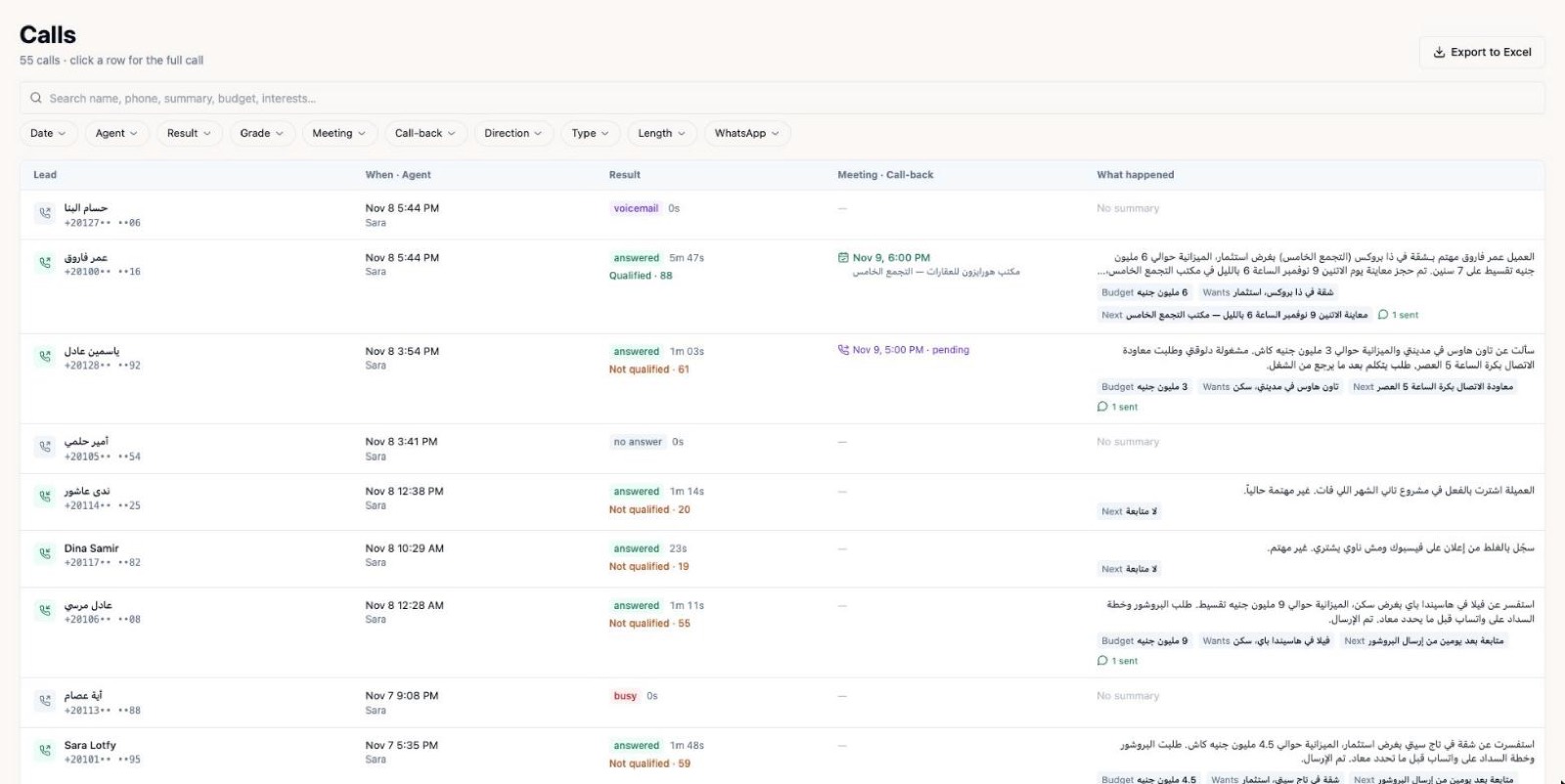
Is an AI call center better than a traditional one? For repetitive calls and round-the-clock coverage, often yes. For complex, emotional or high-stakes conversations, you still need people. Most businesses end up with a mix, and the real question is which calls go where.
This guide compares the two on cost structure, coverage and quality, and is honest about where an AI agent falls short. It is not a promise that AI replaces your team. It is a way to decide what your team should spend its time on.
How call center costs are built
A traditional call center, whether in-house or run by a BPO (business process outsourcing) company, is mostly a people cost: salaries or per-agent fees, training, management, quality assurance, seats, software and phone lines. Costs rise in steps. When call volume grows or you want longer hours, you hire more people and add shifts.
AI call center solutions work differently. You are paying for a system that answers calls, rather than for seats and shifts, so a busy hour or a night shift does not require extra hiring. We will not quote prices here because they depend on your volume and setup, but the shape of the cost is different: less tied to headcount, more tied to usage.
A worked example with made-up numbers
Say a clinic group gets 1,200 calls a month. After listening to a sample, the team finds that roughly half are simple: opening hours, location, booking, rescheduling and fee questions. The rest are clinical questions, complaints and complicated cases. These figures are purely hypothetical, to show the thinking.
- The simple half goes to the AI agent, which answers instantly, books appointments and sends a WhatsApp confirmation.
- The complex half goes to your human team, with the AI's summary attached.
- Your staff now handle fewer calls, and the ones they handle are the ones that benefit from a person.
- Calls that arrive at night or on a Friday are answered rather than left on voicemail.
To run this for your own business, count your monthly calls, sample 50 of them, and sort them into simple and complex. That split tells you far more than any generic comparison.
Coverage: nights, weekends and busy peaks
Human coverage is bounded by shifts. Staffing nights, weekends, public holidays and Ramadan schedules is expensive, so many businesses simply close the phones. An AI agent answers 24/7, and a spike of calls after an ad campaign does not leave people waiting on hold.
That matters in markets where customers expect an answer on WhatsApp or the phone at any hour, and where callers switch between Arabic and English. Kalemna's agents speak English, Arabic dialects & 25+ languages, so one system can cover callers who would otherwise need several language teams.
When you still need people
AI agents are not the right tool for every call, and pretending otherwise leads to bad customer experiences.
- Distressed or angry callers who need empathy and judgment.
- Negotiations, complex sales and high-value deals.
- Sensitive topics such as medical emergencies, legal disputes or fraud.
- Cases that need an exception to your policy, or a decision only a manager can make.
- Customers who simply ask for a person, which should always be honoured.
A good AI call center makes handover smooth: the agent passes the call to a human with the context and transcript, so the customer never repeats their story.
How to move from traditional to hybrid
- Listen to real calls and list the top 10 reasons people call.
- Start with the most repetitive reasons, such as booking, status checks and basic questions.
- Define clearly when a call must go to a person.
- Connect your calendar or CRM so the agent can act, not just talk.
- Review recordings, transcripts and call scoring weekly, then expand to more call types.
- Keep your human team involved. They know what customers really ask, and their feedback improves the agent.
Mistakes to avoid
Do not judge by a demo alone: test with your real calls and your real dialects. Do not automate everything on day one. And do not treat a lower workload for staff as a reason to cut quality checks. Measure answered calls, resolved calls, handovers, customer satisfaction and the number of missed calls, using your own baseline rather than someone else's benchmark.
Frequently asked questions
Will an AI call center replace my human agents?
Usually it changes their work rather than removing it. The AI handles repetitive calls and after-hours coverage, while people focus on complex and sensitive conversations.
Is an AI call center cheaper than a traditional one?
It depends on your volume and call mix. Cost is tied to usage rather than headcount, so it tends to make the most sense for repetitive calls and out-of-hours coverage. Work it out with your own numbers.
Can it replace a BPO?
For some call types it can, but many businesses keep a BPO or in-house team for complex calls and use AI for the rest. A hybrid is the most common and safest starting point.
What happens when the AI cannot answer?
It hands the call to your team with a summary and transcript, or takes a message and follows up, so the customer is not left stuck.