

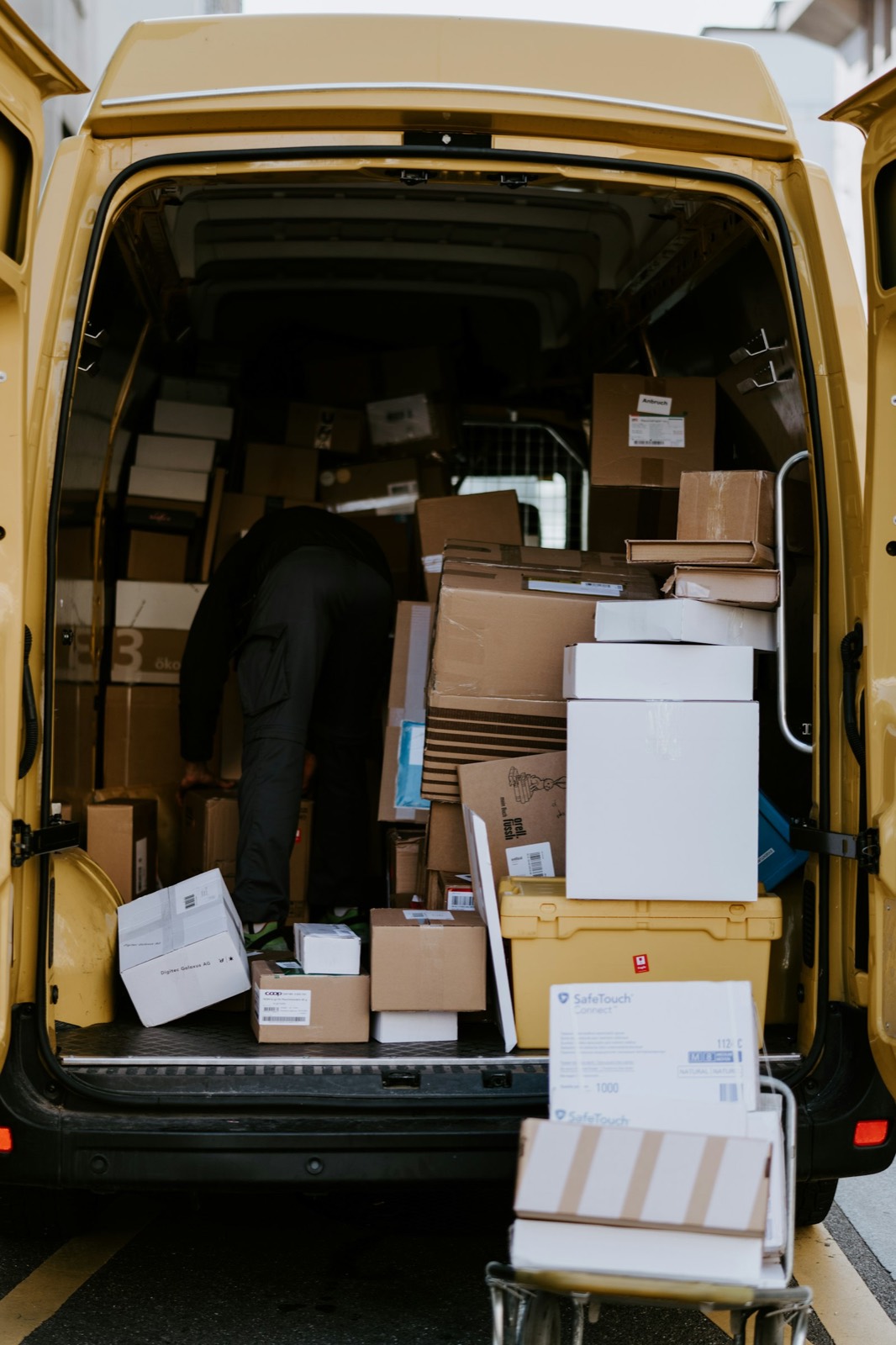
AI for logistics customer service means a voice agent that picks up delivery calls, understands what the customer needs and handles the routine ones itself: where is my parcel, can you come tomorrow, I was not home. The rest goes to your team with the details already written down. For a delivery company, that is most of the day's call volume.
Support lines at courier and delivery companies are busy for predictable reasons. Customers call because they want one small piece of information or one small change, and they want it now. When the line is engaged, they call again, and again, which makes the queue worse.
What delivery customers actually call about
If you listen to a week of calls, you will find the same handful of requests repeating. These are the best candidates for automation because the answer depends on a status or a rule, not on judgment.
- Shipment tracking calls: "Where is my order?" or "Why has it not moved since yesterday?"
- Failed delivery: the courier could not reach the customer, and the customer wants to know what happens next.
- Delivery rescheduling: a different day, a different time window or a different address.
- Receiver changes: someone else will accept the parcel, or the customer wants it left with a neighbour or the building reception.
- Sender questions: pickup times, whether a parcel has been collected, and what the courier needs from them.
How an AI agent handles a tracking or failed delivery call
The agent answers immediately, in the caller's language and dialect, and asks for the tracking number or the phone number on the order. Once it knows which shipment the call is about, it tells the customer the status in plain words and offers the next step.
For a failed delivery, that next step is usually a choice: try again tomorrow, pick a different time, change the address or hold the parcel for collection. The agent records the customer's choice and passes it to your dispatch process, so the courier does not repeat the same failed trip. For live status, the agent needs a connection to your tracking or order system, which is set up with you before launch.
Because the agent works 24/7, evening and weekend calls are not left to pile up for Sunday morning. Kalemna's agents can also send a WhatsApp message after the call with the new delivery slot, which is the channel most customers in Egypt and the Gulf already use to talk to businesses.
What to keep with your human team
Automation works best when it knows its limits. Keep people on the calls where empathy or a decision is needed, and let the agent hand over with the full context so the customer never repeats their story.
- Damaged, lost or missing parcels and anything involving compensation.
- Customers who are clearly upset, or who ask for a person.
- Cash on delivery disputes and refund decisions.
- High-value or time-critical shipments where you want a person to confirm.
A simple setup plan for a delivery company
Start small and expand. Most teams get a better result by automating three or four call types well than by trying to cover everything on day one.
- List your top call reasons from the last few weeks and rank them by volume.
- Choose the two or three that depend on a status or a clear rule, such as tracking, rescheduling and failed delivery.
- Write down the rules: how many delivery attempts, which time windows, what cannot be changed once a parcel is out for delivery.
- Decide the handover moments and who receives them, with call notes attached.
- Test the agent on real call scenarios, fix the wording, then go live and review calls weekly.
Mistakes to avoid
The most common mistake is letting the agent promise things your operation cannot deliver, such as a time slot dispatch has not confirmed. Give it clear rules, and have it say when something needs a person to confirm.
The second is ignoring how customers actually speak. Callers mix Arabic and English, read out tracking numbers digit by digit and give addresses in many different ways. Test with real recordings, not only clean scripts.
The third is never reviewing calls. Every call is recorded and transcribed in the dashboard, so use it to find the questions the agent could not answer and add them.
What to measure
You do not need complicated analytics. Track how many calls the agent resolved without a person, how many were handed over and why, how many rescheduling requests were captured correctly, and how many customers called back about the same shipment. If repeat calls fall over time, the agent is doing its job. Kalemna's call review and insights help you see these patterns.
Frequently asked questions
Can an AI agent give real-time shipment status?
Yes, when it is connected to your tracking or order system. Without that connection it can still take the request, note the tracking number and pass it to your team or send a follow-up.
What happens if a customer wants a person?
The agent hands the call over to your team with a summary of what the customer already said, so nobody has to start again.
Can it handle Arabic dialects and English on the same line?
Yes. Kalemna agents speak English, Arabic dialects & 25+ languages, including Egyptian and Gulf Arabic, and can follow callers who switch languages mid-call.
Is it only for incoming calls?
No. The same agent can make outbound calls, for example to confirm a delivery window the evening before or to arrange a second attempt after a failed delivery.